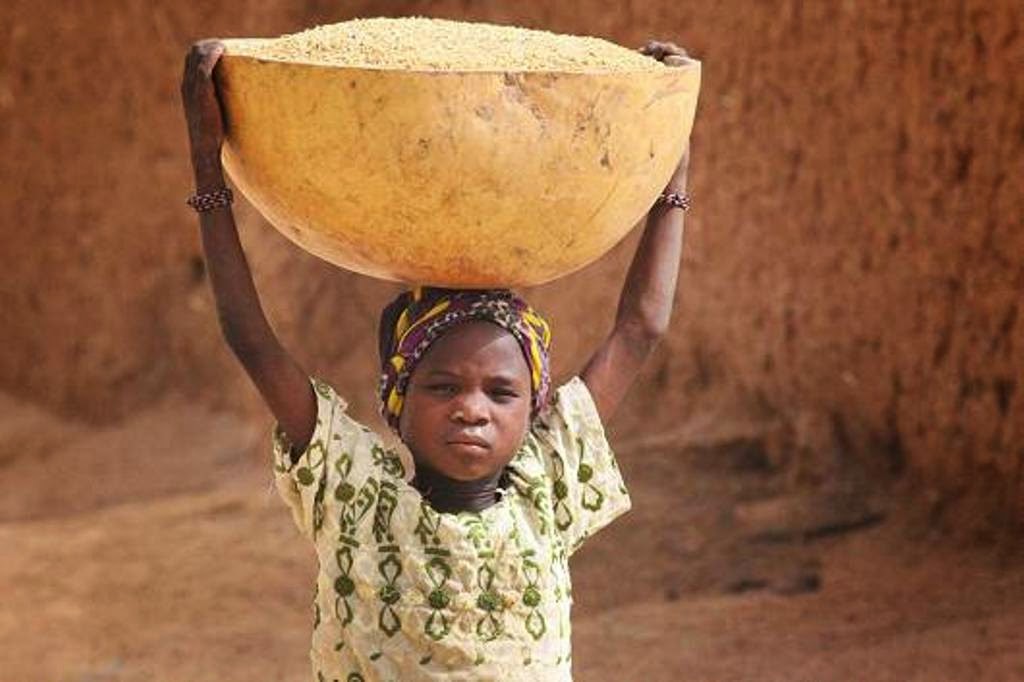
CHILD TRAFFICKING  AND CHILD ABUSE HAS TO COME TO AN END.

Trafficking in children is a global problem affecting large numbers of children. Some estimates have as many as 1.2 million children being trafficked every year. There is a demand for trafficked children as cheap labour or for sexual exploitation. Children and their families are often unaware of the dangers of trafficking, believing that better employment and lives lie in other countries.

Showing posts with label Lost Childhood. Show all posts

Thursday, February 27, 2014

Child Labor Today


Child Labor Today


ABU DHABI, United Arab Emirates — Although the past decade has seen significant progress in the reduction of child labor, the statistics are still staggering.  Today, approximately 168 million children worldwide are trapped in child labor. “The global figures only tell part of the story,” though, says Jo Becker, Director of the Children’s Rights Division for Human Rights Watch.

The life these children are forced to live becomes a perpetual cycle, as they sacrifice their most basic rights (and their future) just to earn basic necessities for survival.

The International Labor Organization (ILO) defines child labor as any “work that deprives children of their childhood, their potential and their dignity, and that is harmful to physical and mental development.”  While the definition is broad, the ILO explains that, “Whether or not particular forms of ‘work’ can be called ‘child labor’ depends on the child’s age, the type and hours of work performed, the conditions under which it is performed and the objectives pursued by individual countries.”

The causes of child labor include high level of poverty and unemployment, limited access to compulsory, free education, violations of existing laws or codes of conduct, inadequate laws and enforcement and exemptions included within national laws.

At 59 percent, the agriculture sector remains the top sector where child labor is found, with the services and industry sectors not far behind.  The United States Department of Labor has identified over 130 products produced by children, with the top products including bricks, tobacco, cotton, coffee, sugarcane, cattle, rice, pornography, diamonds, stones, cocoa and fish.

The two most important international provisions protecting the rights of children are the United Nations Convention on the Rights of the Child (CRC) and the ILO Convention on the Worst Forms of Child Labor (ILO Convention Number 182.)

The CRC, adopted in 1989, “is the first legally binding international instrument to incorporate the full range of human rights” specifically dedicated to children’s rights. It is the most widely ratified human rights treaty in history, holding national governments accountable for protecting and ensuring children’s rights and interests.

The purpose of ILO Convention Number 182, adopted in 1999, was to help strengthen existing provisions on child labor and bring more international attention to the matter. The Convention “helped to focus the international spotlight on the urgency of action to eliminate as a priority, the worst forms of child labor without losing the long term goal of the effective elimination of all child labor.”

International efforts throughout the past decade have reduced child labor by one-third. For girls, the numbers fell by 40 percent; by comparison, child labor for boys decreased by 25 percent. U.S. Department of Labor 2012 statistics, divided by region, indicate:

Asia & Pacific: 77.8 million children
Sub-Saharan Africa: 59 million children (28.8 million of which are engaged in the worst forms of child labor)
Latin America & the Caribbean: 12.5 million children
Middle East & North Africa: 9.2 million children
In spite of the steady progress made in reducing child labor, significant challenges remain for legal protection efforts, as “many countries have good laws that protect children from exploitation, but they lack enforcement.”


The U.S. has enacted several laws that address the importation of goods made with child labor, including Section 307 of the tariff Act of 1930, Executive Order 13126 on the “Prohibition of Acquisition of Products Produced by Forced or Indentured Child Labor” and the Trafficking Victims Protection Reauthorization Act of 2005.  The U.S. Bureau of International Labor Affairs also has child labor projects active in over 50 countries, worth over $200 million, which “seek to remove children from the exploitative work situations and provide them with rehabilitation services and educational opportunities.”

Labor exploitation threatens millions of African children


Labor exploitation threatens millions of African children


JOHANNESBURG (BP) -– A young child sits on the side of the road in Madagascar crushing rocks with a hammer almost too heavy for him to hold.


Another accidentally slices his hand open with a machete while opening cocoa pods on a plantation in Ghana.

A young teenage girl, trafficked for the sex industry, walks the beaches of Kenya looking for business.

A young boy squats naked in a mineshaft in Burkina Faso, chipping ore and loading it into buckets all day long.

A child soldier in the DR Congo carries an automatic weapon he was forced to use to kill villagers he knew.

The words of a young child in South Africa, originally written as a poem in the Xhosa language, read:

"How can I live in this world?
"Oh, what can I do?
"It is so dark ahead of me.
"Mother and father do not want us.

"They sell us to thugs."

Every day millions of children in Africa are at risk of being exploited, resulting in slave-like working conditions. Their childhood is forever lost.

"Forced labor robs children of a childhood, which in turn negatively affects their ability to be constructive members of their communities for the rest of their lives," said Mark Hatfield, Africa director of Baptist Global Response, a Southern Baptist humanitarian aid and relief organization.

"Forced child labor deals a mental blow to the individual child, taking away his ability to dream about a future outside of his present status," Hatfield said.

According to the International Labour Organization (ILO), an agency of the United Nations, Africa has the world's largest child labor population, with the agriculture and mining sectors among the worst offenders.

Poverty is cited as the primary reason for forced child labor in Africa.

The problem is severe in sub-Saharan Africa where more than 40 percent of all children ages 5-14, about 48 million children, work for survival, according to the ILO. Child trafficking for the purpose of labor is common throughout the continent. Family members often exchange children for money, goods or gifts.

"Children forced to work before they reach a reasonable age limits their future capabilities by taking away their right to a basic education, which can be the springboard out of poverty," Hatfield said. "Child labor perpetuates the poverty cycle by keeping the child in a low income, subsistence-only status all their lives."

According to the UN, in expanding economies the demand for labor increases. Unable to cope with high production quotas, industries turn to exploitative child labor. "Children and teenagers enter the risk of being used as cheap labor," a UN report states. "Most of these children are vulnerable due to poverty. They are unaware of their rights, overworked, can't resist."

The report said the children are employed with low or no wages, poor living conditions, hazardous work environments, no healthcare and little to no education opportunities.

Tim Cearley, head strategist for the International Mission Board's (IMB) work in sub-Saharan Africa, raised the questions, "Why should people care about children in Africa? Does it matter?"

He responded, "Jesus said, 'Let the little children come to Me.' I believe we must find ways to share Jesus' love with the 'least of these' -- helping them know the safety and security they can find in Jesus and in Christian community."

Cearley and his wife Charlotte reach out to young street boys in the neighborhood where they live.

"They hang out one block from our house with their begging cans and seem to be starving under the control of their 'master' who lives on our street," Cearley said. "We try to show them love by giving them real attention in our limited [local language], providing some bread or food and trying to share the Good News."

Cearley said IMB colleagues give lots of time in building relationships with children in sub-Saharan African cities.

"It takes lots of energy that is supplemented by good partnering U.S. teams," he said. "Many see Jesus for the first time in acts of kindness and feel His touch in genuine love. In a few cases we see lives transformed as they come to know freedom in Christ."

Cearley, as well as Hatfield, laments the fact that children are exploited by the very ones who should be providing for them and showing them love and care -- the children's family and friends.

"A reasonable amount of responsibility in the way of daily chores is healthy and expected in most rural and low income African families," Hatfield said.

But children who must help their families by doing subsistence farming, carrying water, herding cattle, etc., never get the opportunity to go to school, Cearley added.

"A friend in Mozambique was in this category and only learned to read and write her name as an adult," Cearley said. "Others are brought to larger cities as part of a religious custom to learn humility by begging. But they are often abused by those who are supposed to be teaching them."

Recently Cearley was impacted by a quote from the book "Not for Sale" by David Batstone: "There are more slaves today than at any other point in human history. Our mission is to create a world where no one is for sale."

"This horrible business affects children and teens all over Africa," Cearley said. "I have heard horror stories from central Mozambique. A South African friend was part of a sting operation that found a house of [exploited] kids while looking for her missing house worker's child in 2012. That child had been drawn away from her home by men from her own tribe, who were in league with a Nigerian Mafia gang operating in a nearby city that was selling these kids and shipping them off."

A call for action now resounds around the globe from government and non-government organizations to nonprofit, charity and Christian groups.


"The Bible teaches us to speak up for the oppressed, help the captive, love the children," Hatfield said. "The question is, what are we going to do about it?"

Sunday, February 23, 2014

The Lost Children


The Lost Children

What does it mean to lose one’s home? Especially for a child, who knows little of the ugly politics of hatred that makes people bay for the blood of their neighbours. More than 50,000 people were displaced from their villages when communal riots broke out last September in Muzaffarnagar and neighbouring districts. Many of them were children, who had to battle the biting winter cold in ill-equipped relief camps. Photographer Javed Sultan visited three such camps and organised a drawing workshop for the riot-affected children. He asked them to draw what they remembered of the homes they were forced to leave behind. Here below is a selection of seven child artists and their drawings.

Aash Mohammad, 14 | Tikri village, Baghpat district

Arif, 10 | Soram village, Shamli district

Farooq, 14 | Lisarh village, Muzaffarnagar district

Reshma, 13 | Soram village, Shamli district

Mohammad Sajid, 14 | Tilwara village, Baghpat district

Shabnam, 12 | Malira village, Muzaffarnagar district

Shahina, 8 | Pichokra village, Baghpat district

Thursday, February 6, 2014

Childhood lost,About 15 per cent of commercial sex workers in india are below 15 and 25 per cent are between 15 and 18.


Childhood lost,About 15 per cent of commercial sex workers in india are below 15 and 25 per cent are between 15 and 18.


Child trafficking is the recruitment, transport, transfer or receipt of a child for exploitation.

The International Labour Organization estimates that globally, 1.2 million children are trafficked each year.

The US State Department ranks countries by how they adhere to anti-human trafficking laws. They are categorised as Tier 1, Tier 2, Tier 2 watchlist, Tier 3 and Special Case, with Tier 1 as the best ranking. India falls in Tier 2, which means it does not completely adhere to the minimum standards but is making significant efforts to change the situation.

The main reason for child trafficking is poverty. With industrialisation, the loss of traditional means of livelihood in rural areas forced people to migrate to cities for work. This leads to exploitation of children for commercial sex and cheap labour.

The belts of exploitation
India is a source, route of transit and destination for trafficked women and girls. Interstate trafficking accounts for 89 per cent of trafficking in India.

Bihar, Maharashtra and Madhya Pradesh procure the largest number of minor girls. The biggest buyers of minors are West Bengal and Maharashtra. Punjab and Haryana are popular for 'arranged' marriages.

Pre-pubertal girls from scheduled castes are dedicated to different deities for religious prostitution. After living a few years with priests, they are sold to traffickers. Their market value falls after puberty. This is mostly practised in Karnataka, Maharashtra and Andhra Pradesh.

Sex tourism is the exploitation of young boys and girls, especially street children, by international and Indian tourists. It is prevalent in the Agra-Delhi-Jaipur belt, as well as south and south-west India—Goa, Maharashtra, Karnataka, Kerala, Tamil Nadu and Orissa. Himachal Pradesh and Rajasthan are emerging as destinations. Sex tourism is facilitated by travel agencies, tour operators and hotels. Reports indicate that young boys are brought from Gulf countries to south India for prostitution.

* Dalit freedom groups claim most of those trafficked for sex are Dalits.

* About 10 per cent of the trafficked children come from neighbouring countries, including Bangladesh, Nepal and Pakistan.

* Nepalese insurgents are reportedly trafficking girls to Indian brothels.

* A recent study by California-based NGO Not For Sale says that up to 95 per cent of female victims in rehabilitation programmes in New Delhi are not given education, life skills or job training, forcing many into their original state of vulnerability.

* About 15 per cent of commercial sex workers in India are below 15 and 25 per cent are between 15 and 18.

* Delhi-based NGO Shakti Vahini says that every year thousands of girls in north India are sold for involuntary marriage.

* Anti-poverty agency ActionAid says victims of the Uttarakhand floods last year are especially vulnerable to trafficking because of mass displacement and loss of livelihood.


* About $19 billion is generated worldwide through child trafficking annually.

Popular Posts

Total Pageviews